
Texture, pattern and color are different decisions
Texture describes the character of the surface. Pattern describes the arrangement of repeated shapes or lines. Color is another choice, influenced by materials, lighting and the surrounding property.
Start with the part of the design that matters most. You can explore a simple textured appearance, a more noticeable stamped pattern or a paver-like rhythm without treating any generated image as a material specification.
Compare finishes in the same setting
Keep the project footprint and view similar while you compare. This makes it easier to tell whether you prefer the finish itself or a different shape, lighting effect or border.
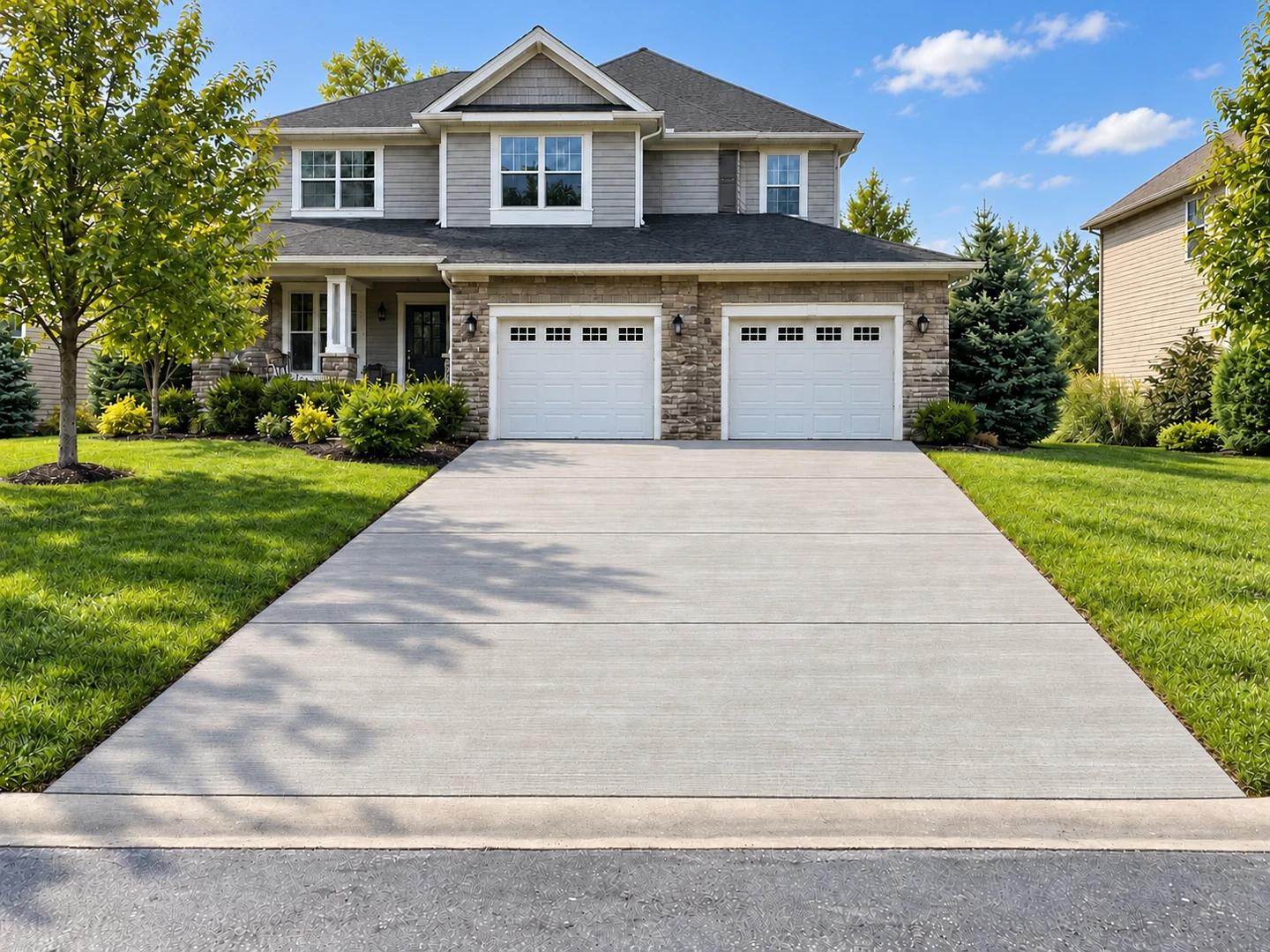
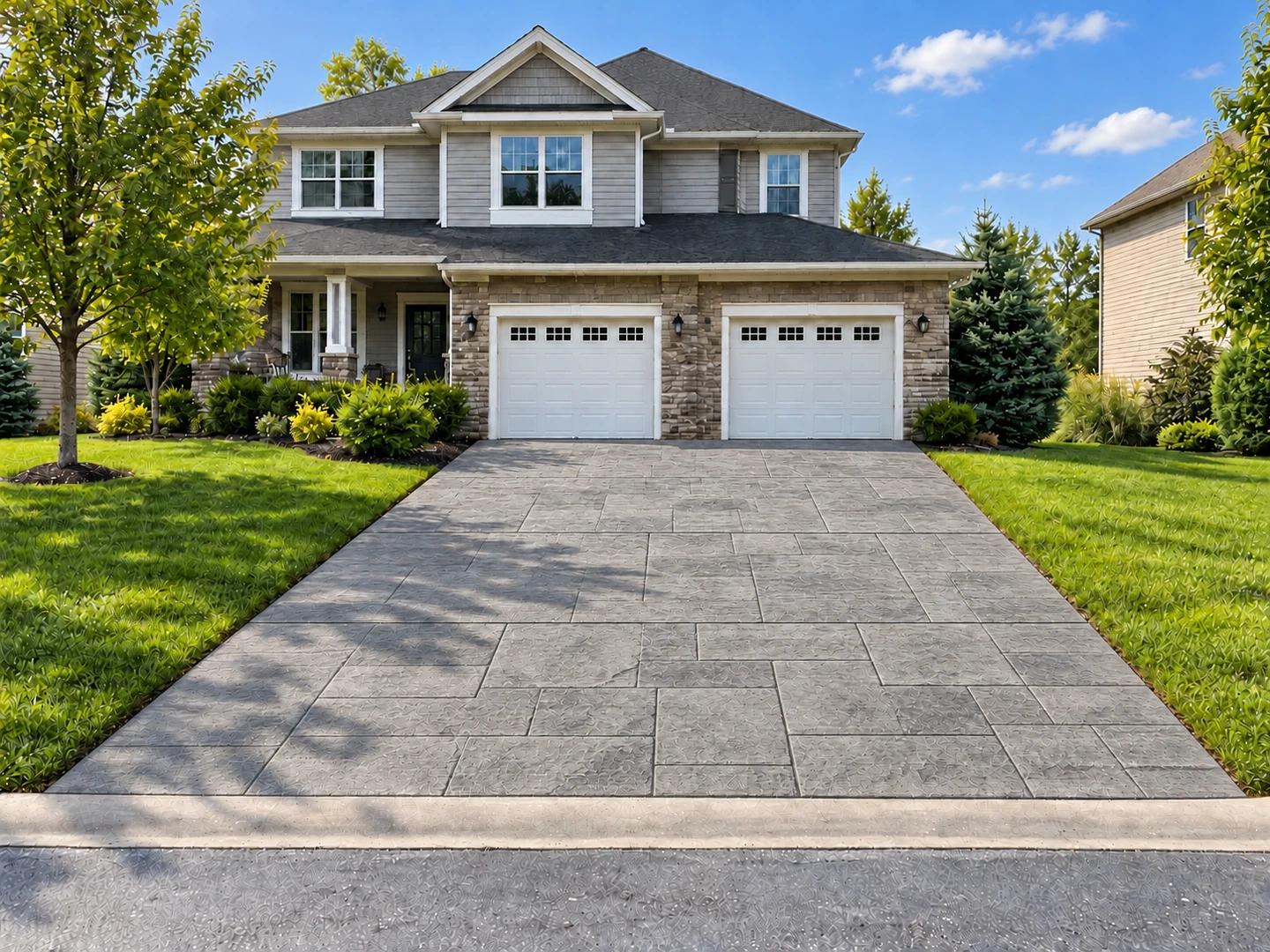
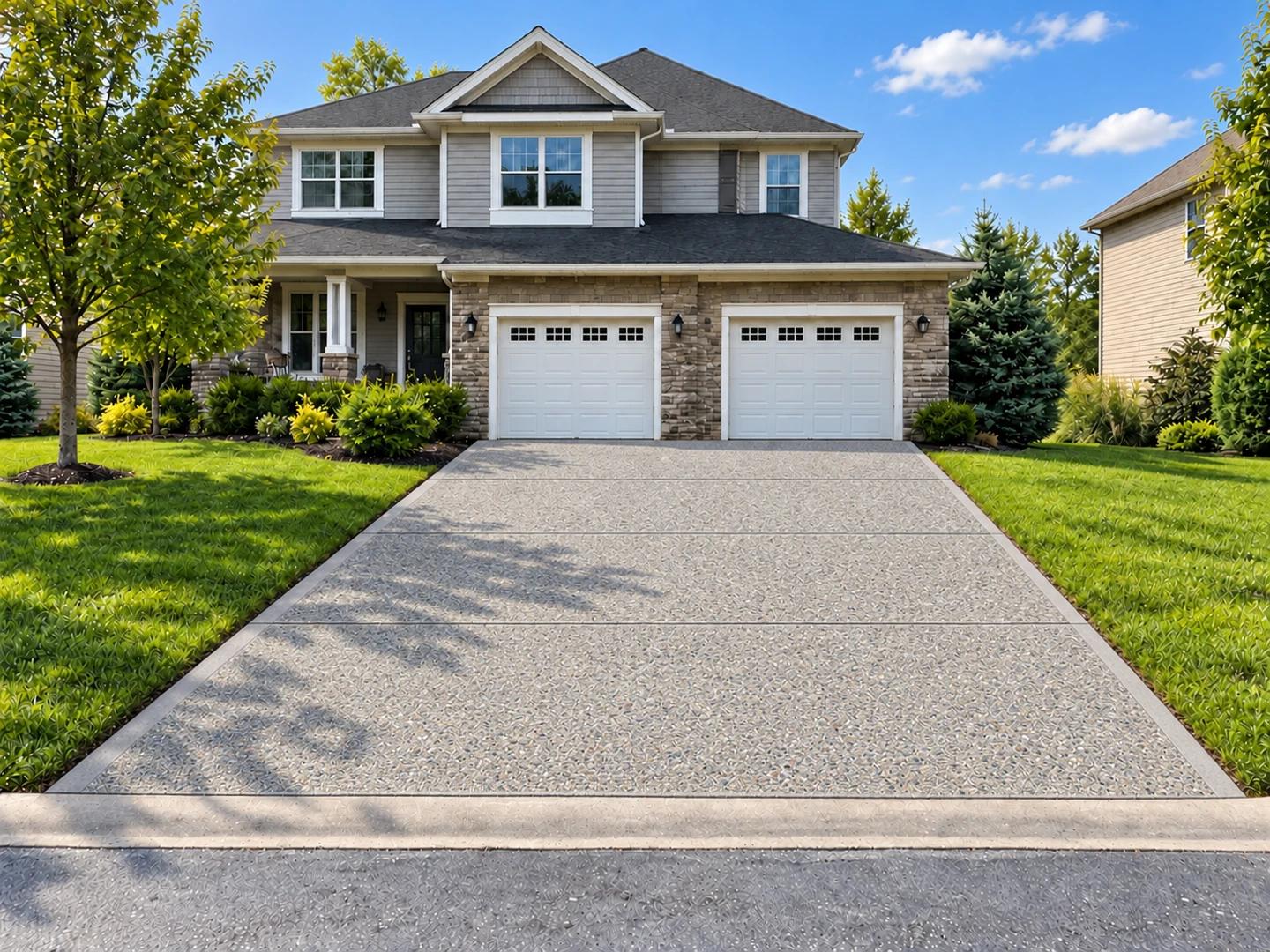
The three illustrated driveway references show broom, stamped and exposed-aggregate concepts on a fictional property. They are not photographs of completed customer projects or proof of how a material will perform.
Shortlist a look, then check its suitability
Outdoor use, wet conditions, vehicle traffic and barefoot use need practical assessment. NRMCA explains that the surface finish should suit the end use; an image cannot test that.
Ask for the actual sample, proposed treatment and maintenance information. A smooth-looking concept should not be interpreted as a recommendation for a highly smooth outdoor surface.
About this guidance
By Concrete Visualizer. Reviewed October 16, 2026. General project-planning information, not a construction specification or a quote.
For background on actual finishing and outdoor surface texture, see NRMCA: Finishing Concrete Flatwork and the American Cement Association: Working with Concrete. The visual comparisons and planning questions here are Concrete Visualizer guidance.