
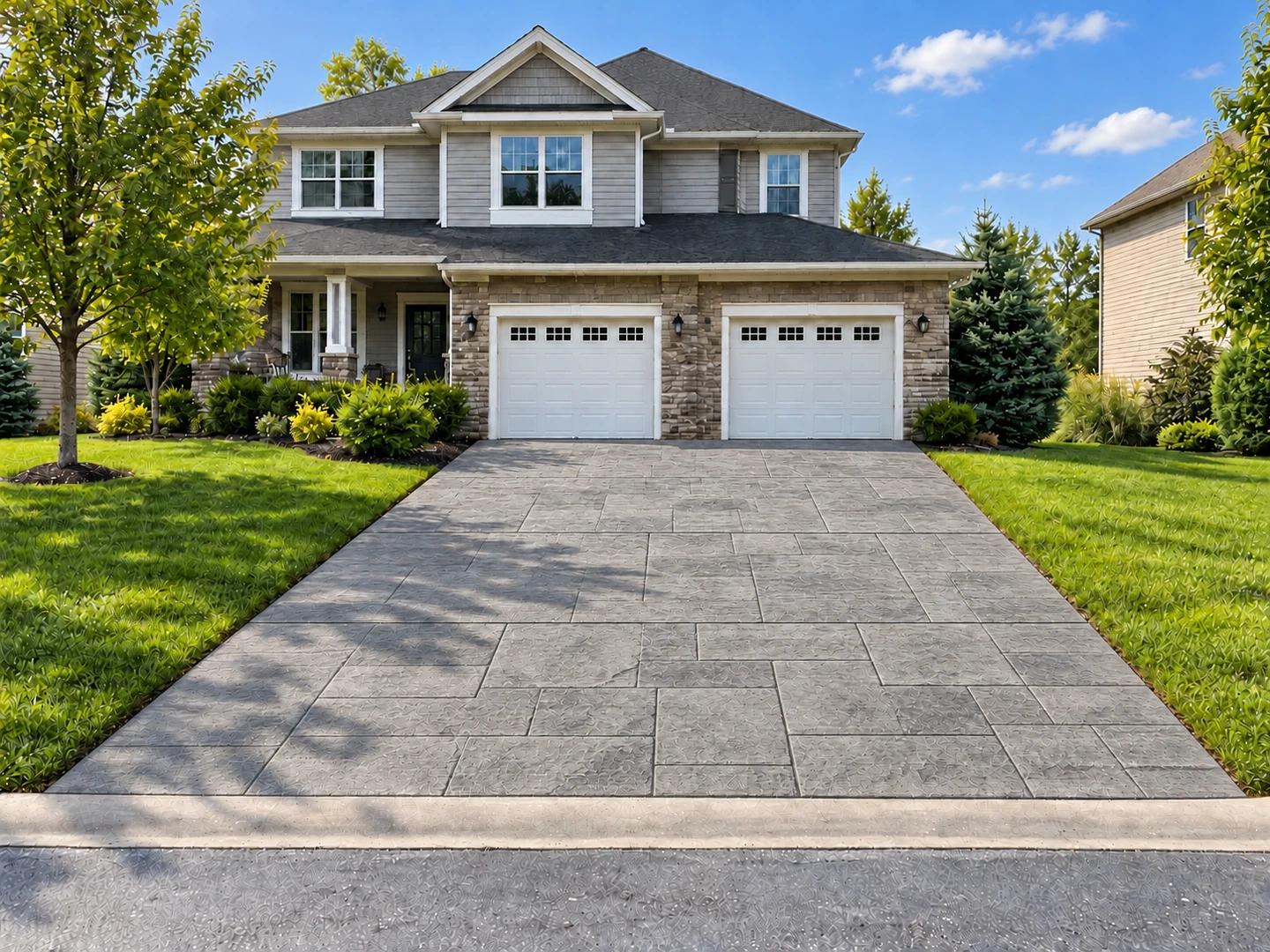
Look for a pattern that belongs with the building
Large rectangular or stone-like patterns can create a different impression from smaller, more irregular units. Look at how the repeated shapes relate to garage doors, windows and existing masonry.
A modern concept need not mean an entirely smooth surface. Pattern, relief and color are separate choices. Ask for the name of the available stamp pattern and a representative physical sample.
Make borders and joints part of the idea
A simple border can frame the main field, while a contrasting border can make it more prominent. Compare both without changing the rest of the layout so you can see what the border contributes.
The illustrated pattern is not a structural or jointing plan. Ask how the contractor will coordinate the proposed pattern with necessary joints and the edges of the actual site.
Turn the concept into a specific finish discussion
Stamped appearance does not establish wet-surface behavior or the maintenance required by a proposed treatment. Confirm suitability for your driveway, patio or pool surround separately.
Keep the preview alongside the sample and written scope. This helps distinguish the visual direction from the actual product and installation being quoted.
- Which stamp and color combination matches this direction?
- How will the pattern meet borders, steps and joints?
- What surface treatment and maintenance are proposed?
About this guidance
By Concrete Visualizer. Reviewed October 16, 2026. General project-planning information, not a construction specification or a quote.
For background on actual finishing and outdoor surface texture, see NRMCA: Finishing Concrete Flatwork and the American Cement Association: Working with Concrete. The visual comparisons and planning questions here are Concrete Visualizer guidance.